
The world of business and innovation is constantly evolving. Organizations face challenges that demand new ideas, cross-sector collaboration, and strategies that not only generate value but also have lasting impact. One initiative that stands out in this space is the Kellogg Innovation Network (KIN), a unique platform designed to foster collaboration among leaders, innovators, and academics from around the globe.
KIN is more than just a network; it is a hub where ideas meet action, where theories developed in academic settings are tested and applied in real-world scenarios. In this post, Vista News will walk through the origins, structure, purpose, and impact of the Kellogg Innovation Network, providing a comprehensive look at its role in shaping modern innovation.
Kellogg Innovation Network (KIN) – Key Information
| Heading | Details |
|---|---|
| Name | Kellogg Innovation Network (KIN) |
| Founded | Early 2000s |
| Founder | Robert C. Wolcott |
| Type | Global innovation and leadership network |
| Membership | Invitation-only; executives, academics, policymakers, entrepreneurs |
| Purpose / Mission | Foster cross-sector collaboration, actionable innovation, and measurable impact |
| Programs | Global Summits, Catalyst Forums, Innovation Expeditions |
| Focus Areas | Business innovation, technology, sustainability, social impact, strategy |
| Global Reach | Participants from multiple continents; international collaboration |
| Impact | Supports corporate strategy, public policy insights, research, and sustainable innovation initiatives |
| Unique Feature | Combines academic insight with practical, real-world applications |
| Mentioned In | Vista News coverage for its global innovation approach |
Origins and Purpose of the Kellogg Innovation Network
The Kellogg Innovation Network began in the early 2000s at the Kellogg School of Management. Its inception was driven by the recognition that solving today’s complex problems—ranging from global sustainability to disruptive technologies—requires collaboration across multiple sectors. Traditional approaches, where business, academia, and government operate in isolation, often fall short in creating actionable solutions.
KIN was established to bridge these gaps. Its main goals include:
- Fostering cross-sector dialogue: Bringing together executives, policymakers, researchers, and entrepreneurs to share knowledge and insights.
- Encouraging actionable innovation: Moving beyond brainstorming to projects that can be implemented in real-world settings.
- Building a global perspective: Understanding how innovation strategies can work across different regions, cultures, and industries.
Think of KIN as a sophisticated brainstorming lab on a global scale. Rather than focusing solely on theory, it encourages participants to take concepts, test them through collaboration, and create strategies that produce tangible results.
Structure and Membership
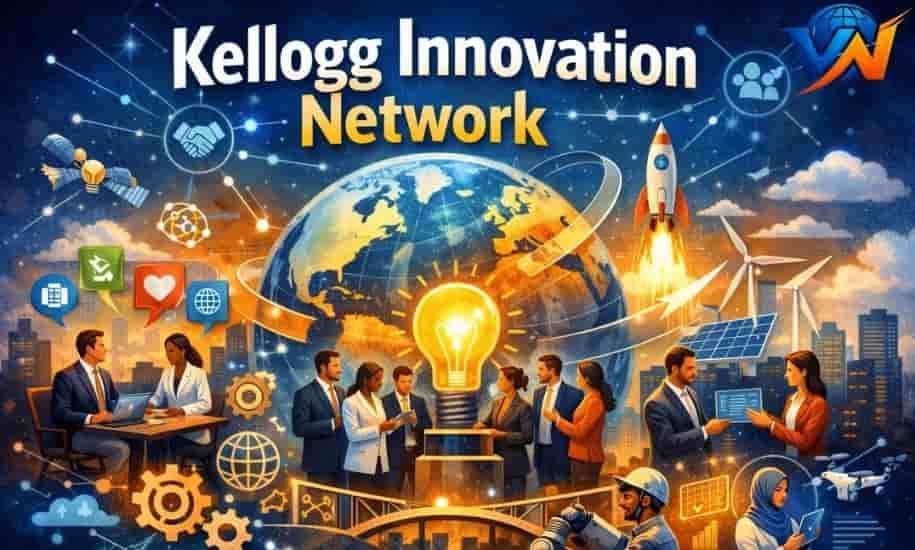
The Kellogg Innovation Network is invitation-only, ensuring that participants are leaders in their fields and capable of driving meaningful change. Its membership spans:
- Corporate executives from diverse industries
- Academic researchers and thought leaders
- Government officials and policy influencers
- Entrepreneurs and innovators
This mix of participants is essential because complex problems rarely have simple solutions. For example, a company trying to implement sustainable energy practices might gain valuable insights from a policymaker familiar with regulatory frameworks, an academic who researches renewable technologies, and a fellow executive who has successfully executed similar initiatives.
Key Programs
KIN organizes its activities around several core programs:
- Global Summits – Multi-day events that focus on thematic challenges. Participants engage in structured workshops, collaborative problem-solving, and discussions designed to produce actionable insights.
- Catalyst Forums – Smaller, topic-focused gatherings that allow deeper exploration of specific innovation challenges. These forums often lead to the development of pilot projects or new collaborative initiatives.
- Innovation Expeditions – Field visits to innovation hubs around the world. These expeditions expose participants to emerging technologies, successful organizational models, and local ecosystems that foster creative problem-solving.
By combining these programs, KIN creates a continuous feedback loop where ideas are developed, tested, and refined with input from diverse perspectives.
How the Network Drives Innovation
The strength of the Kellogg Innovation Network lies in its focus on practical outcomes. While many innovation forums are primarily discussion-oriented, KIN emphasizes implementation and measurable impact.
Collaborative Problem-Solving
KIN participants tackle real-world challenges collectively. Imagine a scenario where a multinational corporation wants to reduce its carbon footprint. Through KIN, executives could collaborate with academics studying renewable energy solutions, government advisors familiar with environmental regulations, and entrepreneurs developing cutting-edge technologies. Together, they can identify strategies that are feasible, scalable, and aligned with regulatory frameworks.
Knowledge Exchange Across Industries
Innovation often happens when ideas from one sector are applied to another. In KIN, a financial executive might learn how agile manufacturing techniques used in the tech sector could streamline their own company’s operations. Similarly, an academic researching public health could discover insights from the logistics practices of a global consumer goods company. These cross-industry exchanges are at the heart of KIN’s impact.
Focus on Measurable Outcomes
A defining characteristic of the network is its insistence on results. Projects and initiatives emerging from KIN are not only conceptual but also measurable. This might include:
- Pilot programs demonstrating feasibility
- New corporate processes or product launches
- Policy recommendations backed by collaborative research
This approach ensures that innovation is not just theoretical but also actionable and sustainable.
Real-World Examples and Conceptual Insights
To better illustrate how KIN operates, let’s consider a few conceptual examples:
Example 1: Sustainable Urban Development
Imagine a city grappling with traffic congestion and pollution. A KIN-style collaboration could involve urban planners, tech innovators developing smart traffic solutions, and investors interested in sustainable infrastructure. By sharing insights and aligning objectives, the group could develop integrated solutions, such as intelligent traffic management systems combined with green transportation incentives.
Example 2: Corporate Innovation Strategy
A company in the consumer goods sector might be exploring digital transformation. Through KIN, executives could learn how similar transformations were implemented in healthcare or education, adapting successful strategies to fit their own context. They could also work with academics to model potential outcomes and anticipate challenges before investing heavily.
Example 3: Social Impact Initiatives
Nonprofits often face challenges in scaling programs efficiently. KIN provides a platform where nonprofit leaders can collaborate with corporate strategists, funders, and policymakers to design initiatives that maximize social impact while remaining financially sustainable.
These conceptual examples demonstrate that the Kellogg Innovation Network is about more than networking; it is about strategic collaboration that leads to measurable innovation.
Global Impact and Long-Term Significance
Over the years, KIN has influenced a wide range of sectors. Its collaborative approach has led to the adoption of new technologies, innovative business models, and strategies that balance profitability with social responsibility.
Cross-Sector Influence
- Corporate Strategy: Companies have integrated insights from KIN into their innovation and R&D planning.
- Public Policy: Policymakers have used KIN collaborations to inform strategies that are both innovative and practical.
- Education and Research: Academic institutions leverage KIN’s insights to refine programs and produce research that is applicable to real-world challenges.
Fostering a Global Mindset
Innovation does not happen in isolation. KIN’s global expeditions and summits encourage leaders to adopt a worldwide perspective, considering how cultural, regulatory, and market differences influence outcomes. This mindset is increasingly crucial in a world where companies and organizations operate across borders and industries.
Long-Term Value
The long-term impact of KIN is seen in its ability to sustain collaborative networks over time. Relationships formed within the network often lead to ongoing partnerships, joint ventures, and knowledge-sharing initiatives that continue well beyond the formal programs.
Conclusion
The Kellogg Innovation Network represents a forward-thinking approach to innovation—one that values collaboration, diversity of thought, and practical outcomes. By connecting leaders from business, academia, and government, KIN enables the exchange of ideas and strategies that are actionable, scalable, and impactful.
Whether it’s tackling global sustainability challenges, implementing corporate digital transformation, or designing social impact programs, KIN provides a structured yet flexible environment where innovation thrives. For readers interested in the dynamics of modern leadership and innovation, the Kellogg Innovation Network offers valuable insights into how ideas become action in a global, interconnected world.
As Vista News highlights, initiatives like KIN show that the most effective innovations are often born at the intersection of diverse perspectives, guided by strategic intent, and executed with a focus on measurable results.
Frequently Asked Questions about the Kellogg Innovation Network
1. What is the Kellogg Innovation Network (KIN)?
The Kellogg Innovation Network is a global platform that connects leaders, innovators, academics, and policymakers. Its main goal is to foster collaboration, exchange ideas, and create actionable solutions to complex challenges across industries.
2. Who can join the Kellogg Innovation Network?
KIN is an invitation-only network. Membership typically includes executives, entrepreneurs, researchers, and government officials who are positioned to implement innovative strategies in their organizations or sectors.
3. What kind of programs does KIN offer?
KIN organizes Global Summits, Catalyst Forums, and Innovation Expeditions. These programs provide participants with opportunities to collaborate, test ideas, and develop real-world solutions in areas like technology, sustainability, and social impact.
4. How does KIN drive innovation in real-world settings?
KIN emphasizes actionable outcomes rather than just discussions. Participants work together on projects, pilot programs, or strategic initiatives that are measurable, scalable, and designed to create tangible results in their industries or communities.
5. Why is the Kellogg Innovation Network considered influential?
Its influence comes from cross-sector collaboration and the ability to turn ideas into action. By connecting diverse perspectives—from business, government, and academia—KIN fosters innovative strategies that have global reach and long-term impact.