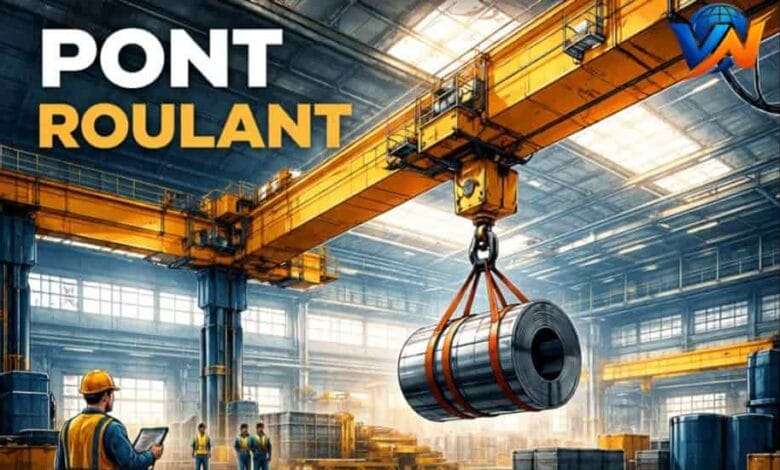
In modern industries, efficiency and safety go hand in hand. One of the most critical tools for handling heavy materials and optimizing workspace is the pont roulant, or bridge crane. These machines are more than just lifting devices—they are the backbone of many industrial operations, from manufacturing plants to warehouses. Let’s explore the key aspects of ponts roulants in a clear, practical way.
Pont Roulant: Quick Reference Bio
| Feature / Aspect | Details |
|---|---|
| Name | Pont Roulant |
| Also Known As | Bridge crane, Overhead crane |
| Type | Industrial lifting equipment |
| Primary Use | Lifting, lowering, and moving heavy loads horizontally in industrial spaces |
| Main Components | Main girders, end trucks, hoist trolley, lifting mechanism, control system |
| Operation Axes | Longitudinal (along rails), Transverse (along bridge), Vertical (lifting/lowering) |
| Common Configurations | Single-girder, Double-girder, Box-girder, Suspended, Wall-mounted, Stacker-type, Manual |
| Typical Load Capacity | 0.5 t to 800 t (depending on type) |
| Span Range | ~7 m to 50+ m |
| Height of Lift | ~5 m to 40 m |
| Industries Used | Manufacturing, Warehousing, Ports & logistics, Heavy industry, Transport infrastructure |
| Benefits | Space optimization, improved safety, increased productivity, operational flexibility |
| Maintenance | Daily inspections, periodic overhauls, predictive monitoring |
| Modern Innovations | Remote diagnostics, automated positioning, smart analytics, load indicators |
| Operators | Pendant, remote control, or cabin-based |
| Safety Features | Load limits, restricted zones, alarms, training requirements |
What Is a Pont Roulant and How It Works
A pont roulant is a crane system that allows materials to be lifted, lowered, and moved horizontally across a workspace. Imagine a bridge spanning a factory floor, with a hoist traveling across it. That’s essentially what a pont roulant does, except it’s built to handle heavy loads with precision and safety.
Key Components
Every pont roulant consists of several main parts:
- Main girders: These are the horizontal beams that span the workspace. They support the crane’s weight and the load it carries.
- End trucks or trolleys: Positioned at each end of the main girders, these wheels run along rails fixed to the building structure.
- Hoist trolley: Moves along the bridge, carrying the lifting mechanism.
- Lifting mechanism: Includes motorized pulleys, cables, or chains, and a hook for vertical movement.
- Control system: Depending on the setup, the crane can be operated via a pendant, remote control, or an operator cabin.
How It Operates
Ponts roulants move along three main axes:
- Longitudinal movement along the runway rails.
- Transverse movement of the hoist across the bridge.
- Vertical movement for lifting or lowering materials.
This multi-axis operation allows the crane to cover the entire floor area without obstructing workflow, making it ideal for busy industrial settings.
Types and Configurations of Ponts Roulants
Not all bridge cranes are the same. Their design depends on the load requirements, the workspace, and the intended use. Here’s a breakdown of common configurations:
By Beam Structure
- Single-girder cranes: Have one main beam. They are economical, suitable for light to medium loads, and ideal for smaller spaces.
- Double-girder cranes: Feature two main beams. These are stronger, able to lift heavier loads, and perfect for larger industrial spaces.
- Box-girder cranes: Use a closed, box-shaped beam for added rigidity. They are often employed for long spans and heavy-duty operations.
- Suspended cranes: Rails are attached directly to the building’s structure. They save floor space and are used for lighter loads.
Special Configurations
- Wall-mounted cranes: Track is fixed to a wall, freeing up the floor area.
- Stacker-type cranes: Integrate stacking functions for warehouses.
- Manual cranes: Operated without motors, suitable for light-duty and cost-effective setups.
These options allow businesses to select the best configuration for their operational needs. For example, a car manufacturing plant may use double-girder cranes for engine assembly, while a small workshop may opt for a single-girder manual crane.
Applications and Benefits in Industry
Ponts roulants play a critical role in several sectors:
- Manufacturing plants: Facilitate assembly line efficiency by moving heavy machinery parts safely.
- Warehouses: Optimize storage and retrieval of large containers.
- Ports and logistics hubs: Handle cargo with precision.
- Heavy industries: Metalworks, shipbuilding, and aerospace rely on these cranes for safety and efficiency.
- Transport infrastructure: During construction or maintenance, these cranes help lift and position large materials.
Why They Matter
- Space Optimization: By operating above the floor, ponts roulants free up ground space, allowing for smoother workflow.
- Increased Safety: Lifting heavy loads manually is risky. Cranes minimize human exposure to dangerous operations.
- Higher Productivity: Materials can be moved quickly and accurately across large areas.
- Operational Flexibility: Modern cranes adapt to different load types and weights, reducing downtime and improving workflow.
Think of a pont roulant as the “invisible helper” of an industrial floor. While workers focus on their tasks, the crane quietly and efficiently moves heavy loads across the factory.
Safety, Maintenance, and Modern Innovations
While ponts roulants are highly efficient, they require proper care and adherence to safety standards.
Safety Measures
- Load limits: Never exceed the manufacturer’s specified weight.
- Restricted zones: Modern cranes have systems that prevent them from entering dangerous areas.
- Alarms and indicators: Ensure operators are aware of load status and crane position.
- Operator training: Proper training reduces accidents and improves precision.
Maintenance Best Practices
- Daily inspections: Check cables, hooks, brakes, and mechanical parts.
- Scheduled overhauls: Regular maintenance ensures long-term reliability.
- Predictive monitoring: Advanced sensors can alert managers to potential issues before they escalate.
Technological Advancements
Ponts roulants are evolving beyond simple lifting mechanisms:
- Remote diagnostics allow managers to monitor crane performance without being on the floor.
- Automated positioning systems improve precision, ensuring loads stop exactly where needed.
- Smart analytics track usage and predict maintenance needs, reducing downtime.
For companies like Ashcroft Capital, integrating modern bridge cranes into industrial operations not only improves efficiency but also ensures a safer and more sustainable working environment. On platforms like Vista News, readers often explore such technological advancements that balance productivity and workplace safety.
Making the Right Choice for Your Operations
Selecting the right pont roulant depends on several factors:
- Load capacity: Estimate the maximum weight to be lifted.
- Workspace size: Longer spans may require double-girder or box-girder cranes.
- Operational frequency: High-usage setups benefit from motorized and automated options.
- Budget: Manual or single-girder cranes are more affordable, while double-girder and smart cranes involve higher investment.
- Future growth: Choose flexible configurations that can adapt as operational needs expand.
For instance, a warehouse planning expansion might invest in a double-girder crane system that allows for heavier loads and wider coverage, ensuring that growth won’t outpace equipment capabilities.
Conclusion
Ponts roulants are indispensable in modern industrial environments. They combine safety, efficiency, and adaptability to handle tasks that would be cumbersome or impossible manually. By understanding the types, applications, and maintenance requirements, businesses can select the right system to enhance workflow, protect workers, and optimize space.
Whether used in manufacturing, logistics, or construction, a well-chosen pont roulant becomes more than a crane—it’s a strategic tool for productivity. Keeping up with technological innovations, safety protocols, and proper maintenance ensures that these cranes continue to provide value for years to come.
Frequently Asked Questions About Pont Roulant
1. What is a pont roulant used for?
A pont roulant is used to lift, lower, and move heavy loads horizontally across industrial spaces. It helps factories, warehouses, and ports handle large materials safely and efficiently.
2. What are the main types of ponts roulants?
The main types include single-girder, double-girder, box-girder, suspended, wall-mounted, and manual cranes. Each type suits different load capacities and workspace layouts.
3. How is a pont roulant operated?
Depending on the setup, a pont roulant can be operated via a pendant control, remote control, or from an operator cabin. Some modern cranes even include automated or smart control features.
4. What industries use ponts roulants?
They are widely used in manufacturing, warehousing, logistics hubs, heavy industries like metalworking and shipbuilding, and transport infrastructure projects.
5. How do you maintain a pont roulant safely?
Regular maintenance is key. Daily inspections, checking cables, brakes, hooks, and scheduled overhauls ensure safe operation. Modern cranes also use sensors and analytics for predictive maintenance.