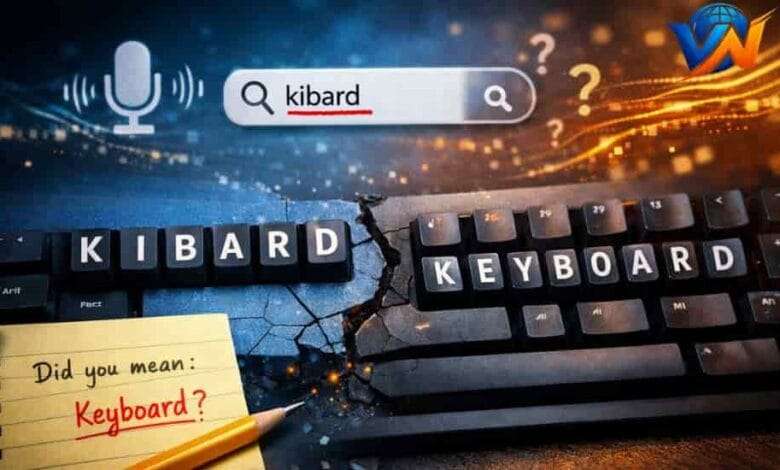
The word kibard looks unusual at first glance. It isn’t something most people remember learning in school, and it rarely appears in formal writing. Yet, when you search for it online, you’ll find thousands of results. Blog posts, comments, queries, and short explanations all circle around the same question: what is kibard, and why do people use it?
In most cases, kibard is a misspelling of the word “keyboard.” It usually appears when someone types quickly, uses voice input, or writes English as a second language. Because keyboards are such a central part of daily digital life, even small spelling variations like this can spread widely across search engines and social platforms.
That doesn’t mean kibard is meaningless. In the digital world, how people actually type matters just as much as how words are supposed to be spelled. Search engines, apps, and content creators all pay attention to these patterns. Over time, certain misspellings gain their own identity online, even if they never become official words.
From a content perspective, kibard is interesting because it sits at the intersection of language habits, technology use, and search behavior. It shows how real users interact with devices and how language naturally evolves in informal spaces.
At Vista News, topics like this are useful because they reveal how everyday digital behavior shapes what people read, search, and share—often without realizing it.
Kibard Bio Table
| Attribute | Details |
|---|---|
| Term | Kibard |
| Category | Digital language / Online search term |
| Primary Meaning | Common misspelling of the word “keyboard” |
| Dictionary Status | Not an official dictionary word |
| Common Usage | Online searches, casual typing, voice-to-text input |
| Related Word | Keyboard |
| Origin Type | Typographical and phonetic variation |
| Appears In | Search queries, blogs, comments, informal content |
| Language Context | Informal digital communication |
| SEO Relevance | Used as a secondary keyword due to frequent typo searches |
| Technical Association | Computer input devices |
| User Intent | Usually seeking information about keyboards |
| Formal Recognition | None |
| Risk or Legal Concerns | None (neutral, non-defamatory term) |
| Popularity Driver | High frequency of keyboard-related searches |
How Kibard Became a Common Online Term
Kibard did not appear because someone deliberately invented a new word. It emerged organically, through repeated human behavior. When millions of people type the same word every day, small variations are inevitable.
There are a few main reasons why kibard shows up so often.
Fast typing and muscle memory
When people type quickly, they rely more on muscle memory than conscious spelling. The word “keyboard” is typed so often that fingers sometimes skip letters or replace them based on sound. Over time, kibard becomes a familiar mistake rather than a random one.
Phonetic spelling habits
Many users spell words the way they sound. For someone hearing “keyboard” spoken aloud, kibard can feel like a reasonable attempt. This is especially common among non-native English speakers, where sound-based spelling is a natural learning step.
Voice-to-text and autocorrect behavior
Voice input tools don’t always capture pronunciation perfectly. Accents, background noise, or speech patterns can lead to unexpected results. Once a term like kibard appears on screen, users may not correct it, especially in casual searches.
Mobile typing environments
Smaller screens increase the likelihood of errors. On phones and tablets, keyboards are compact, and quick typing often results in missing letters. Because “keyboard” is a long and familiar word, users may not notice the error.
Over time, search systems recognize these repeated patterns. Instead of ignoring them, they adapt. That’s how kibard becomes searchable, recognizable, and worth discussing—even if it remains unofficial.
Kibard and Its Connection to Keyboards and Technology
Even though kibard is not a formal term, it almost always points back to one thing: the keyboard as a digital tool. To understand why the misspelling matters, it helps to look at how central keyboards are in modern life.
Keyboards are used for:
- Writing messages and emails
- Searching the web
- Coding and programming
- Gaming and entertainment
- Online learning and remote work
Because of this, people search for keyboard-related topics constantly. When they accidentally type kibard instead, the intention stays the same. The search engine’s job is to figure that out.
Search intent matters more than perfect spelling
Modern search systems focus on intent. If someone types kibard, the system doesn’t assume they want something different from a keyboard. Instead, it looks at patterns, related terms, and common corrections.
From a practical standpoint, kibard becomes a signal rather than a mistake. It tells systems and content creators:
- What users want
- How they type
- Where confusion or friction exists
Content visibility and language flexibility
In digital publishing, flexible language matters. Writers who acknowledge common misspellings without abusing them can make content more accessible. For example, explaining that kibard usually refers to a keyboard helps users feel understood instead of corrected.
This approach improves clarity and trust. It also reduces frustration, especially for readers who already feel uncertain about spelling or technical terms.
Technology adapts to users, not the other way around
One of the biggest lessons from kibard is that technology adapts to people. Instead of forcing perfect spelling, systems evolve to recognize real behavior. This is why autocorrect, search suggestions, and predictive typing exist in the first place.
Kibard may never appear in a dictionary, but its presence reflects how digital tools prioritize usability over perfection.
The Role of Kibard in Search, Content, and Digital Strategy
Beyond language curiosity, kibard plays a quiet role in search behavior and content planning. This doesn’t mean exploiting mistakes, but rather acknowledging how people interact with technology.
Why typo-based searches matter
Typos reveal friction points. When a large number of users misspell the same word, it suggests:
- The word is frequently used
- The spelling is easy to disrupt
- The topic is highly relevant
For content creators, this insight can help shape explanations, FAQs, and supportive language.
Ethical use of misspellings in content
It’s important to handle terms like kibard responsibly. Overusing misspellings or forcing them unnaturally into text can reduce credibility. A balanced approach is better:
- Mention the term briefly
- Clarify its meaning
- Focus on accurate information
This keeps content readable and respectful while still being useful.
Digital literacy and accessibility
Misspellings are not signs of ignorance. They often reflect speed, convenience, or language diversity. Recognizing this supports digital inclusion.
For example, someone searching “kibard not working” is likely dealing with a technical problem, not a spelling lesson. Clear explanations help far more than corrections.
Broader relevance beyond technology
The idea behind kibard applies beyond keyboards. Similar patterns appear in finance, law, and business terms. When words are complex or unfamiliar, people simplify or approximate them.
Conceptually, this is similar to how people discuss financial ideas without formal language. Someone might describe a complicated investment structure in casual terms. The core meaning still matters, even if the wording isn’t perfect.
The lesson is simple: clarity beats correctness when communication is the goal.
Is Kibard a Word, a Name, or Something Else?
This question comes up often, and the answer depends on context.
As a dictionary word
Kibard is not a recognized dictionary word. It has no formal definition, grammatical rules, or official usage standards.
As a name or identifier
In rare cases, kibard may appear as a surname, username, or creative label. These uses are separate from its connection to keyboards and don’t change its general meaning online.
As a digital signal
The most accurate way to describe kibard is as a digital signal. It signals intent, behavior, and user habits rather than formal language.
In that sense, kibard is similar to many internet-born terms that exist because people keep using them—not because they were approved or designed.
This is why discussions about kibard remain relevant. They reflect how language adapts to tools, and how tools adapt to people.
Conclusion: What Kibard Tells Us About Digital Language
Kibard may look like a simple typo, but it represents something larger. It shows how humans interact with technology in real, imperfect ways. It highlights the gap between formal language and everyday use—and how that gap is slowly narrowing.
In practice, kibard almost always means “keyboard.” But conceptually, it means flexibility, accessibility, and adaptation. It reminds us that communication doesn’t have to be flawless to be effective.
As digital spaces continue to grow, these small details matter more than ever. Paying attention to how people actually type, speak, and search helps create clearer content and better experiences.
That’s why topics like kibard fit naturally into discussions at Vista News—not because they’re trendy, but because they reflect how the digital world truly works.
FAQs About Kibard
1. What does kibard mean?
Kibard is commonly used online as a misspelling of the word “keyboard.” Most people who type kibard are searching for information related to computer keyboards.
2. Is kibard a real word?
No, kibard is not an official dictionary word. It exists mainly in digital spaces due to typing habits, phonetic spelling, and voice-to-text errors.
3. Why do people search for kibard instead of keyboard?
This usually happens because of fast typing, mobile keyboards, autocorrect behavior, or spelling based on sound rather than formal rules.
4. Does kibard refer to a different device or technology?
No, kibard does not represent a separate product or technology. In most cases, it simply points to the standard keyboard used with computers and digital devices.
5. Is it okay to use the word kibard in online content?
Yes, it can be used carefully in informal or explanatory contexts, especially to clarify common search behavior, but it should not replace the correct word “keyboard” in formal writing.