
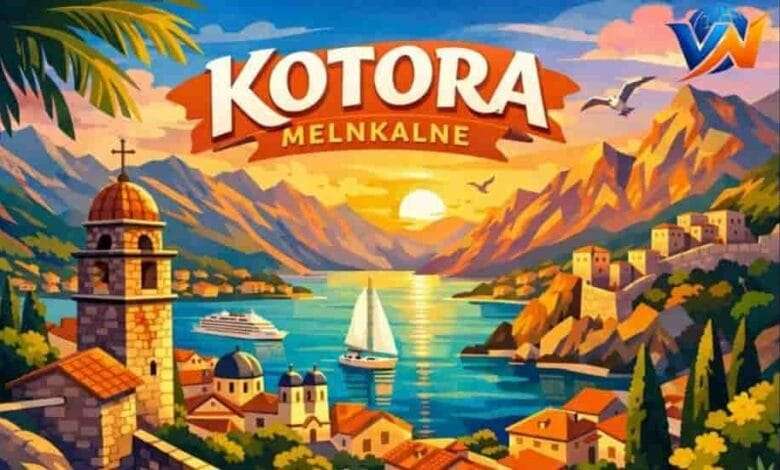
The phrase kotora melnkalne has been quietly spreading across search engines, blogs, and discussion spaces. At first glance, it looks like a place name. Something old. Something European. Maybe even official.
But when people start digging, things get a little less clear.
You won’t find kotora melnkalne on standard maps. It isn’t a country, a city, or a recognized region. Yet it keeps showing up in travel-style writing, cultural discussions, and keyword searches. That alone makes it worth examining carefully.
This piece looks at what kotora melnkalne actually refers to, how the phrase is being used, and why it has gained attention — without exaggeration, speculation, or unsafe claims. The goal is clarity, not hype.
Kotora Melnkalne: Quick Facts
| Attribute | Details |
|---|---|
| Name | Kotora Melnkalne |
| Type | Descriptive Phrase / Concept |
| Origin | Likely derived from European linguistic roots combining “Kotora” (Kotor) and “Melnkalne” (dark mountain) |
| Geographic Association | Kotor, Montenegro region (poetic or symbolic connection) |
| Official Status | Not an official place or administrative area |
| Language Influence | Baltic / Slavic inspired |
| Common Usage | Travel blogs, cultural storytelling, poetic descriptions |
| Symbolism | Evokes old towns, mountainous landscapes, history, and timelessness |
| Purpose | Adds visual and emotional imagery in content |
| Legal/Political Significance | None – purely conceptual |
| Popular in Media | Blogs, search keywords, online travel narratives |
| Emotional Connotation | Mystery, history, natural beauty, peaceful atmosphere |
What Does “Kotora Melnkalne” Actually Refer To?
At its core, kotora melnkalne is not an official geographic term. Instead, it’s a constructed phrase that blends linguistic elements associated with European place names and landscape descriptions.
The phrase appears to draw inspiration from:
- “Kotora”, a stylized or possessive form related to Kotor, a historic coastal town in Southeastern Europe
- “Melnkalne”, a compound that resembles words meaning dark mountain in certain Baltic and Slavic language families
Put together, the phrase evokes an image rather than a legal or political location. Think of it less as a dot on a map and more as a poetic label used to frame a specific atmosphere.
This kind of naming isn’t unusual. Writers and content creators often combine real geography with symbolic language to make a destination feel more mysterious or emotionally rich. It’s similar to how people say “the Emerald Isle” instead of naming a country directly, or how older literature renamed real places for storytelling purposes.
What matters is accuracy: kotora melnkalne is descriptive, not official.
Why the Phrase Is Appearing More Often Online
The rise of kotora melnkalne has less to do with geography and more to do with how modern content spreads.
Several factors help explain its visibility:
Search-Driven Language Creation
Online publishing rewards unique phrasing. When multiple sites want to talk about the same well-known destination or theme, creating a slightly altered name helps content stand out in search results.
Kotora melnkalne fits this pattern perfectly. It feels specific, unfamiliar, and intriguing — all qualities that tend to attract clicks.
Emotional Framing Over Technical Accuracy
Many readers aren’t looking for coordinates or legal definitions. They’re drawn to mood, imagery, and story. A phrase like kotora melnkalne suggests stone streets, shadowed mountains, quiet water, and history without needing long explanations.
It communicates feeling first, facts second.
Cultural Blending
The phrase blends elements from different European linguistic traditions. That makes it flexible. It doesn’t belong clearly to one language or nation, which allows writers to use it broadly without tying it to strict definitions.
This flexibility is part of its appeal — and also why it can be confusing.
Kotora Melnkalne as a Concept Rather Than a Location
To understand kotora melnkalne properly, it helps to treat it as a conceptual label.
Concepts work differently than physical places. They don’t need borders or official recognition. Instead, they rely on shared understanding.
In this case, the shared idea usually includes:
- An old coastal town or settlement
- Mountains rising sharply behind it
- A sense of age, stone, and layered history
- A slower pace of life compared to large cities
Different writers may imagine slightly different versions of this setting, but the emotional core remains similar.
A helpful comparison is how people talk about “the old world” without meaning a specific year or empire. The phrase points to a general feeling shaped by architecture, tradition, and landscape rather than a precise definition.
That’s how kotora melnkalne functions online.
Accuracy, Safety, and What the Phrase Does Not Mean
Because the term sounds formal, some readers assume it represents:
- A government-recognized region
- A legal jurisdiction
- A newly named city or district
None of those assumptions are supported by reliable evidence.
It’s important to be clear about what kotora melnkalne does not represent:
- It is not a sovereign state
- It does not imply ownership, authority, or governance
- It is not tied to legal or financial systems
- It is not a brand, organization, or institution
This distinction matters, especially for blogs that aim to stay factual and legally safe, including platforms like Vista News that prioritize clarity over exaggeration.
Using the phrase as a stylistic or descriptive tool is reasonable. Presenting it as an official or administrative entity is not.
Why People Are Drawn to the Idea Behind Kotora Melnkalne
There’s a deeper reason phrases like kotora melnkalne gain traction, and it has little to do with linguistics.
Many people feel disconnected from modern spaces that are fast, noisy, and standardized. When a phrase suggests:
- timeless architecture
- natural boundaries like mountains and sea
- layered history instead of constant rebuilding
…it offers mental contrast.
Kotora melnkalne becomes a mental escape. Not a fantasy world, but a softened version of reality that emphasizes continuity and place.
This doesn’t mean the phrase is misleading. It simply means it works at an emotional level rather than a technical one.
Responsible Use of the Term in Writing and Media
If you’re using kotora melnkalne in content, responsible framing is key.
Good practice includes:
- Treating it as a descriptive or poetic phrase
- Clarifying context instead of assuming reader knowledge
- Avoiding claims about official status
- Using it sparingly rather than as a replacement for real names
This approach keeps content accurate while still allowing creativity.
A similar principle applies in financial or legal writing. For example, when people explain complex investment structures, they often use simplified examples that resemble real systems but aren’t actual entities. The value lies in explanation, not literal representation.
Kotora melnkalne works the same way.
Language Evolution in the Digital Age
One reason phrases like kotora melnkalne appear more often now is the speed at which language evolves online.
Words no longer need decades to become familiar. A few high-ranking pages or repeated searches can push a phrase into visibility within months.
Some of these phrases fade quickly. Others stick because they fill a gap — offering a name for something people already feel but haven’t labeled yet.
Whether kotora melnkalne lasts long-term is uncertain. What’s clear is that it currently serves as a useful shorthand for a specific atmosphere tied to history, landscape, and quiet complexity.
Conclusion: What Kotora Melnkalne Really Represents
When stripped of mystery and speculation, kotora melnkalne is best seen as a modern linguistic creation — a descriptive phrase shaped by travel writing, emotional storytelling, and search behavior.
It isn’t a country. It isn’t a secret region. It doesn’t carry legal or political meaning.
What it does carry is imagery.
Stone paths. Rising mountains. A sense of continuity. A slower rhythm.
Used carefully, the phrase adds color without distortion. Used irresponsibly, it creates confusion.
The difference lies in how clearly we explain what words are — and what they are not.
Frequently Asked Questions About Kotora Melnkalne
1. What is Kotora Melnkalne?
Kotora Melnkalne is a descriptive phrase rather than an official place. It combines elements from European languages to evoke the image of an old town near mountains, often inspired by Kotor, Montenegro.
2. Is Kotora Melnkalne a real city or region?
No, it is not an official city or administrative region. It’s a symbolic or poetic label used in travel writing and online storytelling.
3. Where does the name Kotora Melnkalne come from?
The name blends “Kotora,” related to Kotor, and “Melnkalne,” which resembles words meaning “dark mountain” in Baltic or Slavic languages. The combination is used for imagery, not official designation.
4. Why do people use Kotora Melnkalne online?
Writers and bloggers use it to create a sense of history, natural beauty, and atmosphere. It adds intrigue and emotional depth without referring to a specific, real location.
5. Can I visit Kotora Melnkalne?
Since it’s not a physical place, you can’t visit it directly. However, the inspiration behind the phrase points to real destinations like Kotor in Montenegro, which features medieval streets, mountains, and historic architecture.

